Holocaust Memorial Day 2026
Holocaust Memorial Day 2026
- Holocaust Memorial Day 2026 - Bridging Generations
- Newcastle's Holocaust Memorial Day programme
- Take part in Holocaust Memorial Day
Holocaust Memorial Day 2026: Bridging Generations
'Bridging Generations' is not just a theme, it is also a call to action. A reminder that remembrance is all our responsibility. It encourages us to actively engage with the past, to listen and to learn so that we can build a bridge between memory and action and between history and hope for the future.
As time passes there are fewer and fewer people who remember the Holocaust or the genocides in places such as Bosnia, Darfur and Cambodia. For those that remain the memories may start to fade or blur but it is vital that those memories are preserved so that future generations can understand and learn from the horrors of the past.
Why Bridging Generations?
Genocide doesn't discriminate by age. Babies, children, teenagers, adults and older people have all experienced unimaginable suffering that most of us will never fully understand. Some lost their whole families and have no one to carry their memories forward or to honour their legacy.
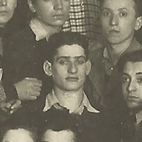
"If something happens, I would want there to be somebody who would remember that someone named D. Berger once lived. This will make things easier for me in difficult moments." - David Berger
David Berger lived in Przemysl, in Southern Poland where he was a member of the Akiva Zionist Youth Movement. After the Nazis invaded in 1939, he fled to Vilnius in Lithuania where other Zionist groups gathered.
David sent the photo above, taken in 1940, to his girlfriend, Elza Gross, who had left Poland for Palestine in 1938. On 2 March 1941, he sent a postcard to Elza to say goodbye, as he correctly assumed he would not survive. David was shot dead in Vilnius later that same year.
Bridging Generations highlights the vital role people of all generations play in preserving the memory of the Holocaust and more recent genocides. It focuses on the power of intergenerational conversations. How listening to the stories of those that came before and sharing them with those who come after can connect those memories to the present and the future.
The Holocaust Memorial Day Trust has identified four 'generations', some overlapping, who need to work together, talk, listen and record the memories of the past for future generations.
Murdered generation: The people who were murdered or died during the Holocaust or other genocides. Jewish, gay, disabled, Roma, Sinti and other people murdered during the Holocaust. The millions killed in genocides in Cambodia, Rwanda, Bosnia and Darfur and the Yazidi people who are amongst those still suffering persecution. These are the generation of people, of different ages and from different times, whose lives and voices were brutally taken away. Their experiences must not be forgotten.
First generation: The people who survived the Holocaust and other genocides. Few Holocaust survivors are still alive today. Many of their testimonies were recorded after the war while others shared their memories with family and friends. There are more first generation survivors from other genocides who often share their stories at Holocaust Memorial Day events. Schools, colleges and youth groups are encouraged to share the memories of their parents and grandparents and to talk to survivors who are still alive today so that all their memories and experience can be preserved.
Second and third generation: The children and grand children of survivors carry their legacy in a deeply personal way. For them, these stories are family history and they are responsible for keeping their ancestors legacy alive.
People with no direct family link to the Holocaust or any other genocide: This 'generation' can play a vital role in Bridging Generations. They, we, all have the responsibility to engage and learn about the Holocaust and genocides and to share what they discover with others. Every one of us has a responsibility for remembrance. Bridging Generations is about all of us. We all have a responsibility to keep history alive and to use the lessons of the past to shape a future that better protects the dignity of every human being today, tomorrow and long into the future.
Newcastle's Holocaust Memorial Day Programme
Groups. communities and organisations, with support from the council, have once again created a moving tribute to those who lost their lives, who were persecuted or who suffered during the Holocaust and in the genocides that followed. All the events in our programme are based on the theme of Bridging Generations.
- The Forgotten Holocaust - exhibition
- In the footsteps of the holocaust: The story and letters of a German Jewish family - talk
- Holocaust Memorial Day Commemoration - by invite or application only
- Understanding the Holocaust in an Age of Emboldened Racism - lecture
- Bridging Generations - Roma Commemorative Event
- Brundibár Arts Festival
- Brundibár Arts Festival: opening concert
- Brundibár Arts Festival: short concert 1
- Brundibár Arts Festival: short concert 2
- Brundibár Arts Festival: short concert 3
- The Last Musician of Auschwitz - film
- ‘Just Freddy’ by Joel Stern - book talk
- Brundibár Arts Festival: A Voice Not Stilled - concert
- Brundibár Arts Festival: short concert 4
- Brundibár Arts Festival: short concert 5
- Brundibar Arts Festival: closing concert
The Forgotten Holocaust - exhibition
Monday 19 to Saturday 31 January. West End Library
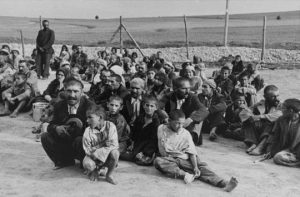
Historians estimate that between 200,000 and 500,000 Roma and Sinti people were murdered by the Nazis and their collaborators with many more imprisoned, used for forced labour and subjected to forced sterilisation and medical experiments. But despite the high death toll awareness of the persecution of Roma people is low. It is little wonder the Roma Holocaust is often referred to as the 'Forgotten Holocaust.'
Dedicated to the memory of the Roma victims of the Holocaust, this exhibition uses original photographs, documents and personal testimonies, it reveals the experience of Roma families who faced persecution, displacement and genocide under Nazi rule. Each item display gives voice to individuals whose stories were silenced for decades. The exhibition highlights the brutality they endured and the resilience they showed in the face of unimaginable suffering,
Visitors are invited to see how policies of racial hatred targeted Roma communities across Europe, leading to the murder of an estimated 500,000 Roma. It also reveals acts of survival, courage and cultural strength that defied attempts to erase Roma identity. The exhibition is not only a historical record but also a call to recognise the Roma Holocaust as an essential part of European history.
Tickets: Booking is not required for this free event.
In the footsteps of the Holocaust: The story and letters of a German Jewish family - talk
Thursday 22 January, 2pm. Bewick Hall, Newcastle City Library
Using original photos and letters, author Ainslie Hepburn will illustrate the life story of her husband's grandparents, who escaped from Germany in 1939 but did not survive the Holocaust. Hermann Hartog was a Jewish teacher in north-west Germany and eventually fled through Belgium and France with his wife, Henny, after they had managed to send their two young daughters to England. Ainslie will also consider the significance of memory and memorials as we look back at these events of more than 80 years ago. The Hartogs' biography was written by Ainslie and published in early 2025 by Pen and Sword Books Ltd.
Tickets: Booking is essential for this free event. To reserve a place please visit https://www.eventbrite.co.uk/o/newcastle-libraries-3037748424
Holocaust Memorial Day Commemoration
Monday 26 January, 1.45pm. By invite or application only
Over the last year children and young people from across Newcastle have engaged with survivors of the Holocaust and other genocides to find out about their lived experiences. Students have learned about history, identity, empathy and the importance of standing up to prejudice and hate through personal testimonies, creative activities and critical reflection.
On Holocaust Memorial Day students and survivors will come together for a Learning Day Conference where they will exchange experiences and reflections. The event will help students to identify the warning signs of discrimination and understand the significance of remembrance. The conference will close with the city's Holocaust Memorial Day event.
Inspired by this year's Bridging Generations theme, our Holocaust Memorial Day Commemorative event is an opportunity for people across the city to come together to remember those who were persecuted or murdered during the Holocaust and the genocides that followed and reflect on the lessons of the past.
The event will include a primary schools' choir performing a newly commissioned song, the reading of a new piece that celebrates hope, guest speakers and reflections by secondary school pupils on what they have learned.
Tickets: A limited number of tickets are available for this free event. You can find out more and apply here. Please apply by Friday 17 January 2026
Understanding the Holocaust in an Age of Emboldened Racism - lecture
Thursday 29 January, 5.15pm. Bewick Hall, Newcastle City Library
Professor Ian Biddle explores some of the ways in which changing ways of thinking about the Holocaust reflect changes in our understanding of cultural, political and racial difference. There was a time where most of us believed in the usefulness of Holocaust education as a way of confronting the horrors of racism.
But in recent years racism is increasingly evident in political discourse. How then, do we teach, talk about and make sense of the Holocaust in this context? What must we change to address these momentous changes to public political discussion and debate?
Tickets: Booking is essential for this free event. To reserve a place please visit https://www.eventbrite.co.uk/o/newcastle-libraries-3037748424
Bridging Generations - Roma Commemorative Event
Friday 30 January, 12 noon. Memorial Garden, Newcastle Civic Centre
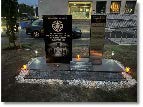 A commemorative event that will take place at the recently unveiled Roma Holocaust Memorial at Newcastle Civic Centre, the first of its kind in the UK. The memorial is a unique landmark that reminds us of the suffering of the Roma and Sinti victims of the Holocaust, whose stories are often overlooked.
The event is a collaboration with local schools who have examined historic records, eye-witness accounts and testimonies about the Roma and Sinti Holocaust and developed their own readings, poems and reflections.
There will be contributions from young and older members of the Roma community. Candles and f lowers will be placed at the memorial as symbols of remembrance.
Tickets: Booking is not required for this free event.
Brundibár Arts Festival
Saturday 31 January to Saturday 8 February 2026
 The Brundibár Arts festival is an annual programme of events that showcases little known music written during the Holocaust. It was launched in 2016 as the first annual festival of its kind.
The festival takes it's name from the children's opera "Brundibár", meaning bumblebee, which was first performed by children in Theresienstadt camp in 1943. Theresienstadt was a hybrid Nazi ghetto, transit and concentration camp located in the town of Terezin in what is now the Czech Republic.
The site was used by the Nazis for propaganda purposes to counter rumours of death camps. For a visit of the Red Cross in June 1944, the Nazis set up fake shops, cafes and cultural events to present it as a model Jewish settlement.
In reality, conditions in the the camp and ghetto included severe overcrowding, forced labour, malnutrition and disease. Around 33,000 of the 140,000 Jews sent to Theresienstadt died due to the horrific living conditions. Another 90,000 prisoners were deported to killing camps in occupied Poland, with less than 4,000 surviving.
Despite the horrific living conditions the ghetto prisoners organised lectures, concerts and other artistic activities which have become a significant part of their legacy. Today the Terezín Memorial is dedicated to the remembrance of and education about the Holocaust.
Brundibár Arts Festival: opening concert
Saturday 31 January, 7.30pm. St James United Reformed Church
In a return to where they began, the Brundibár Arts Festival will mark their tenth anniversary with an opening concert that features some of the extraordinary music that composers, despite intense suffering, managed to create while held in Terezin.
Programme:
Zikmund Schul: Duo for violin and viola
Viktor Ullmann: Herbst for voice and string trio
Jan Bradley: Special Commission 2018
James Simon: Lament for cello and piano
Pavel Haas: Quartet no.2 with percussion
Tickets: To find out more or to buy tickets visit https://www.brundibarartsfestival.com/
Brundibár Arts Festival: short concert 1
Monday, 2 February 2026, 6.30pm. Literary and Philosophical Society, Newcastle
As part of their tenth anniversary, Brundibár Arts Festival are launching a brand new series of short concerts to showcase the work of more remarkable artists.
Programme:
James Weeks: "Joy" Special Commission 2016
Ilse Weber: Series of songs
Hans Krása: Quartet
Tickets: To find out more or to buy tickets visit https://www.brundibarartsfestival.com/
Brundibár Arts Festival: short concert 2
Tuesday, 3 February 2026, 1pm. Literary and Philosophical Society, Newcastle
Programme:
Pavel Haas: Fata Morgana
Volodymyr Runchak: “Fragments of a Diary” - special commission 2024
Tickets: To find out more or to buy tickets visit https://www.brundibarartsfestival.com/
Brundibár Arts Festival: short concert 3
Tuesday, 3 February, 6.30pm, Brunswick Methodist Church, Newcastle
Programme:
Zikmund Schul: viola and cello duo
James Simon: Quartet
Frederick Viner: “ Tracing Sunbeams” Special commission 2019
Tickets: To find out more or to buy tickets visit https://www.brundibarartsfestival.com/
The Last Musician of Auschwitz - film
Wednesday 4 February, 7pm. Tyneside Cinema, Newcastle
This moving and thought-provoking film seeks to answer the question 'How can there be music in the worst place in the world?' The Last Musician of Auschwitz reveals how music became a lifeline and form of resistance amid the horrors of the Holocaust.
At the centre of the film is Anita Lasker-Wallfisch, a 99 year old cellist who is the last living survivor of the camp orchestras. Her testimony frames this powerful documentary.
Anita's grandson, Simon Wallfisch, will join the special screening for a question and answer session.
Tickets: To find out more and buy tickets please visit https://tynesidecinema.co.uk/event/the-last-musician-of-auschwitz/
‘Just Freddy’ by Joel Stern - book talk
Thursday 5 February, 2pm. Bewick Hall, Newcastle City Library and online
Joel Stern tells the story of his Grandfather's experience as shared in his book 'Just Freddy'. From a young boy growing up in 1930s Germany to the rise of Nazism which turned his life upside down. Freddy's memories, presented by Joel, are an important reminder that the Holocaust did not start with violence, concentration camps and murder but with suspicion and intolerance of others.
Tickets: Booking is essential for this free event. To reserve a space please visit https://www.northeastmuseums.org.uk/discoverymuseum/whats-on/holocaust-memorial-day-talk
Brundibár Arts Festival: A Voice Not Stilled
Thursday 5 February, 7.30pm. St James United Reformed Church
The Orchestras of Auschwitz: Long forgotten musical compositions and arrangements by Holocaust prisoners have been rescued from obscurity. It is time to bring them back to life.
A Voice Not Stilled: Based on “Gabi’s Theme”, which was composed by Gabriella Kolliner who died in Auschwitz. Remembered by her brother, one of the few who survived the Holocaust, decades after her death, the theme was later transcribed by her nephew, who commissioned a new piece based on it.
Programme:
The Orchestras of Auschwitz
Natalie Klouda: “Alma Rose” Special Commission 2022
“A Voice Not Stilled”: Sinfonia Concertante based on a theme by Gabriella Kolliner
Tickets: To find out more or to buy tickets visit https://www.brundibarartsfestival.com/
Brundibár Arts Festival: short concert 4
Saturday, 7 February, 1pm. All Saints Church, Gosforth
Programme:
Hans Krása: Three songs for Bari tone, clarinet and cello
Samuel Quatermain Smith: “ You will be loved” Special Commission 2021
Victor Ullman: Piano Sonata No7
Tickets: To find out more or to buy tickets visit https://www.brundibarartsfestival.com/
Brundibár Arts Festival: short concert 5
Saturday, 7 February, 6.30pm. All Saints Church, Gosforth
Programme:
Adolf Strauss: Ich weiss bestimmt, ich werd dich wiedersehn
Hans Winterberg: Suite for Clarinet and piano
Prach Boondikulchok: “Songs without Words” Special Commission 2023
Tickets: To find out more or to buy tickets visit https://www.brundibarartsfestival.com/
Brundibár Arts Festival - Closing concert
Sunday, 8 February, 7.30pm. King's Hall, Newcastle University
Featuring music from well-loved Czech composers and the Brundibár Arts Festival's tenth specially commissioned piece, 'January 27, 1945'.
Programme:
Hans Krása: Quartet Theme and Variations
Bedřich Smetana: Piano trio
Antonín Dvořák: Bagatelles for 2 violins and piano
Gideon Klein: Duo for violin and cello
Special Commission 2026: Lee Bradshaw "January 27, 1945"
Tickets: To find out more or to buy tickets visit https://www.brundibarartsfestival.com/
Take part in Holocaust Memorial Day
Holocaust Memorial Day Online
There are lots of ways to get involved in Holocaust Memorial Day online or using your social media including watching the Holocaust Memorial Day 2026 UK ceremony. By becoming part of the online conversation you can help spread messages of understanding and tolerance.
To find out more about taking part in Holocaust Memorial Day online visit https://www.hmd.org.uk/take-part-in-holocaust-memorial-day/marking-holocaust-memorial-day-online/
Organise an activity
Every year local Holocaust Memorial Day activities take place across the UK. They bring people from all backgrounds together to learn more about the Holocaust, Nazi persecution and the genocides that followed. They also offer an opportunity for people to consider how we can all make our society a better place that is free from hatred, prejudice and discrimination.
Holocaust Memorial Day Trust supports individuals and organisations to mark Holocaust Memorial Day by providing free resources, historical information and ideas for how to get involved.
For more information visit https://www.hmd.org.uk/take-part-in-holocaust-memorial-day/organising-an-activity/
Light the Darkness
Every year people from across the UK and around the world put a lit candle in their window to Light the Darkness. Join the national Light the Darkness moment at 8pm on Tuesday 27 January

In Newcastle the Civic Centre will be lit purple as residents from across the city light candles in memory of victims of the Holocaust and other genocides, in tribute to the survivors and to take a stand against the prejudice, discrimination and hatred that still exist today.
If you would like to give us feedback on our website, please complete this short online form.