Doorstep Crime and No Cold Calling Zones
Doorstep Crime and No Cold Calling Zones
Doorstep crime is when rogue traders knock at your door and pressure you into buying something or signing up for a service, they may do this by cold calling via the telephone or in a face-to-face visit. If you are contacted by such traders or are aware of any operating in your residential area, if it is safe to do so please contact us with any information you have about the traders, or if necessary, Northumbria Police.
Not all traders are dishonest, but there are things you can do to make sure that you don't become a victim;
- Identify who is calling by insisting on seeing and checking their identification
- If you are suspicious or have concerns do not open your door at all and at all times, use a door chain or spy hole
- Don't be rushed into agreeing to buy
- Take your time to make a decision and one which is the right one for you
- Never hand money up front.
Nottingham Knockers
We are aware of cold callers going door to door selling items across Newcastle – so called “Nottingham Knockers”.
These people may often offer household cleaning products for sale from rucksacks or suitcases.
- Please be vigilant, do not purchase anything and never hand over cash on your doorstep.
- If you feel threatened, close the door and contact Northumbria Police.
- Always ensure your property is fully secure.
- The items offered are often of low quality and advertised at inflated prices.
- The “sales pitches” can also be part of a wider operation to identify burglary targets.
- Those involved may claim to be part of rehabilitation schemes and could produce ID cards – these are entirely false and have no legal bearing.
- Never buy anything from these people and report them to police.
Visit the Northumbria Police website or call 101.
Financial Abuse
The Newcastle Safeguarding Adults Board on the 15 November 2021 launched guidance on identifying, preventing and responding to financial abuse.
Financial abuse can be wide-ranging and complex. It can be difficult to identify and knowing where to go for help might be confusing for both the person at risk and those supporting them. The guidance aims to help with this.
This guidance is primarily in relation to adults with care and support needs and is intended to complement the over-arching Newcastle Safeguarding Adults Board multi-agency safeguarding adults policy and procedures. However, many of the services, support and information detailed are universal and are available to all adults.
Over the last five years, financial abuse has accounted for between 16-19% of all Section 42 enquiries undertaken in Newcastle. Financial abuse can have a serious impact upon a person, not only on their money or property but also on their overall wellbeing, physical and mental health.
Government's Fraud Strategy
Fraud Strategy 2026-2029 Disrupting crime, supporting economic resilience and delivering justice.
The strategy outlines the UK Government’s approach to tackling fraud. It is structured around three pillars: Disrupt, Safeguard and Respond. It includes a major investment programme and governance arrangements to oversee delivery.
Fraud against individuals and businesses is evolving rapidly and causing significant harm. It devastates victims, erodes public trust, and poses a serious threat to the United Kingdom’s national and economic security.
The Government has made crime reduction and economic growth central to its Manifesto.
Fraud against individuals and business is the largest crime type in the UK and costs our economy £14.4 billion in 2023–2024.
The Government will invest over £250 million between 2026 and 2029 to deliver this Strategy, aimed at combatting fraud against individuals and businesses.
It introduces a system-wide approach that recognises the agility of criminals and the need for wide-ranging intervention with close collaboration between all partners.
This strategy also sets out how the Government will measure and oversee its delivery, supported by a strengthened governance framework based on leadership and accountability across the counter-fraud system.
The Fraud Strategy will support the broader plans for Police Reform whereby overall responsibility for Fraud, Economic Crime and Cyber Crime will transfer to the National Police Service (NPS) with the National Crime Agency (NCA).
The Strategy also works in parallel with the Public Sector Fraud Authority who lead the Government’s response to fraud against the public sector.
The full strategy can be found at: https://www.gov.uk/government/publications/fraud-strategy-2026-to-2029
Scams Awareness
The annual Scams Awareness campaign is an annual opportunity to raise awareness and empower consumers to take action against those crimes. Scams are many and varied, with increasingly complexity and sophistication. By arming consumers with the knowledge, they need to recognise a scam, they can protect themselves and those around them, preventing harm in the first place.
Scams are not just a minor inconvenience to consumers. Aside from financial loss, they can cause distress, misery, and even if a scam has been avoided, it can lead to a widespread loss of consumer confidence. Please remember they can happen to anyone.
Victim Support Booklet
See the victim support booklet for fraud and cybercrime recently created by the Metropolitan Police Service. It has been developed to provide clear guidance and signposting for individuals affected by fraud and scams. The booklet includes practical advice, support pathways, and key contact information to help victims access the assistance they need following a crime
Scam examples
For information about Universal Credit scams please see our dedicated page.
For other examples of scams affecting consumers please see:
- HMRC warning over tax scams
- grandad left 'traumatised' after losing £25,000 in sophisticated BT scam
- elderly man defrauded out of more than £5,000
- dodgy salesman pressured elderly people into buying 'unwanted and low quality' seafood
- gang of rogue roofers who fleeced elderly people jailed for almost 18 years
- cowboy builder jailed for targeting vulnerable pensioners
- fraudsters who bullied elderly into buying fish jailed
- 'Aggressive' Chester-Le-Street fish salesman jailed for scamming elderly customers
- County Durham fish seller who manipulated victims as old as 105 into buying fly-ridden fish
- The latest County Durham fish-seller put behind bars for scamming elderly customers out of thousands
- Three men convicted of stealing £120,000 from elderly and vulnerable North East victims through scam
- Scammers made £2 million by tricking people into buying European health cards
- Rogue builder who fleeced North East victims out of £130,000 while fobbing them off jailed
- North East scammers who sold fish to vulnerable people and took hundreds of pounds jailed
No Cold Calling Zones
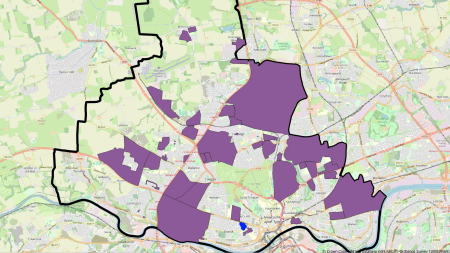
The No Cold Calling Zones (NCCZ's) we have set up aim to decrease doorstep crime incidents by specifying an area in which uninvited traders are not welcome. These are set up in partnership with Northumbria Police and Safe Newcastle, and all residents are given a window sticker. It can be a criminal offence for unwanted traders to come into the zone and the advice we offer provides residents the confidence to say 'no' when approached on their doorstep. We will investigate why traders are operating within a NCCZ if they should not be. There are currently 33 NCCZ's implemented in Newcastle covering some 84,799 households.
Fifteen of our wards: Parklands, Walkergate, Benwell & Scotswood, Kenton, North Jesmond, South Jesmond, Chapel, Dene and South Gosforth, Blakelaw, West Fenham, Byker, Castle, Fawdon & West Gosforth, Gosforth and Kingston Park South and Newbiggin Hall wards have all been declared as No Cold Calling Zones.
No Cold Calling Zone Locations
We have zones set up throughout the city where an area has met the criteria that; there is a history of doorstep crime or distraction burglary, a vulnerable population, and within a defined geographic area. If you are within a NCCZ you should have received a consultation letter, and notification of when the zone was implemented along with a window sticker to display on your property. If you have not received this, please contact us for a replacement window sticker. A list of the current zones is also available.
Frequently Asked Questions
If you believe an area could benefit from the protection of a NCCZ please contact us for information about the process. We have prepared some FAQ guidance (pdf 126 kb) which may be of assistance.
To access a guide on Doorstep Crime as published by the House of Commons go to Guide (pdf 1 mb)
A list of the current zones is also available.
Energy Companies
The 6 largest gas and electricity companies have a voluntary code of practice to not call at houses displaying a sticker. These are:
- British Gas
- EDF Energy
- E-On
- N Power
- Scottish Power
- SSE
Press Article
To see an article promoting the work related to NCCZ's please see the Newcastle Chronicle's article on a No Cold Calling Zone introduced in Kenton. To see an article on the response to an issue with the alleged breaches of a NCCZ in Kenton go to the Chronicle of the 16 August 2023.
How To Report
- Police: All fraud in the UK is reported to the Police at Report Fraud by phone or online: www.reportfraud.police.uk 03001232040
- Emails: Forward Fraudulent emails to: report@phishing.gov.uk
- Banks: Dial 159 (Stop Scams UK Hotline) An automated line which takes you through to your Bank's Fraud Team. For alternative ways of contacting your bank only use the contact details on your bank card or the official website.
- Phone Numbers: Forward phone numbers sending you fraudulent messages or calls to 7726.
Contact
Trading Standards service, Directorate of Housing and Communities, Civic Centre, Newcastle upon Tyne, NE1 8QH. Email: tradingstandards@newcastle.gov.uk
Did you know?
We have 33 zones implemented across Newcastle, protecting some 84,799 households. Fifteen of our wards: Parklands & North Gosforth, Walkergate, Benwell, Scotswood & Denton Burn, Kenton, North Jesmond, South Jesmond, Chapel, Dene and South Gosforth, Blakelaw & Cowgate, West Fenham, Byker, Castle, Fawdon & West Gosforth, Gosforth and Kingston Park & Dinnington and Newbiggin Hall & Callerton wards have all been declared as No Cold Calling Zones.
To see an article on the response to an issue with the alleged breaches of a NCCZ in Kenton ward go to the Chronicle of the 16 August 2023.
Related Pages
If you would like to give us feedback on our website, please complete this short online form.